August 4, 2026 |
Author: Ben Smith |
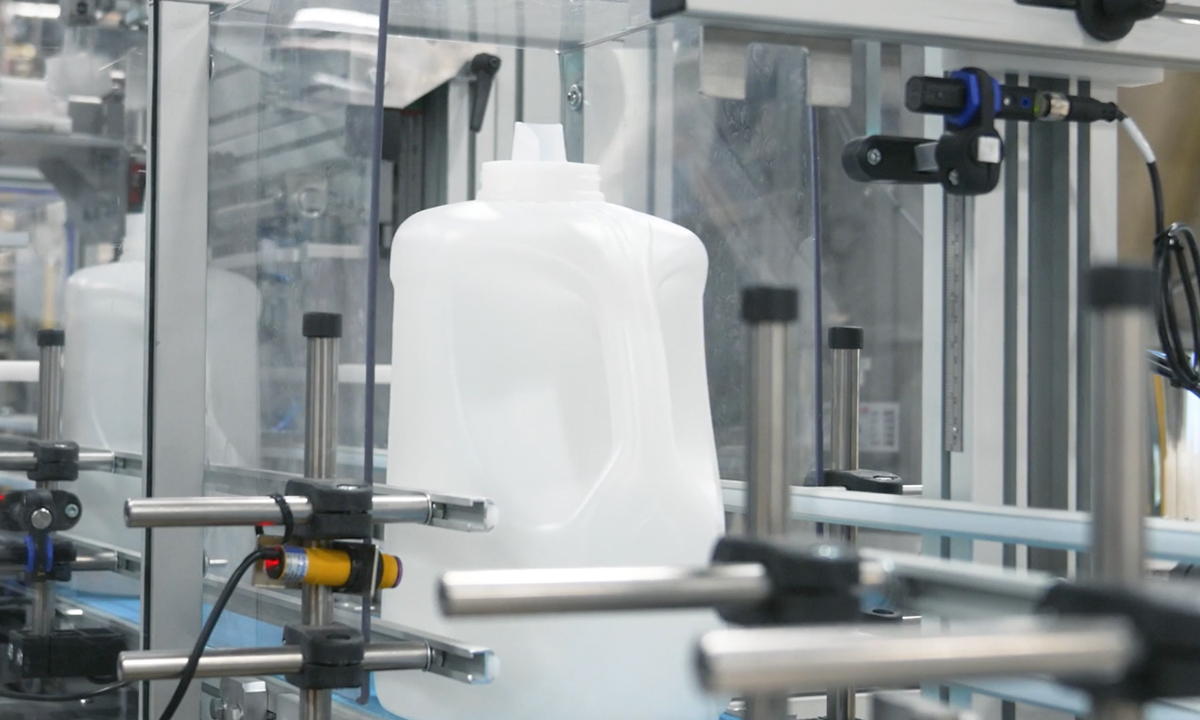
For brands developing plastic packaging, one of the first and most important decisions has nothing to do with color, size, or branding, it’s choosing the right manufacturing process. Injection molding and blow molding are both core plastic manufacturing methods, but they solve very different problems. Choosing the wrong one can mean higher tooling costs, longer lead times, or a container that simply can’t be produced the way a brand envisions it.
Understanding when to use injection molding versus blow molding, and when a project actually needs both, is essential for getting a plastic packaging project right from the start. Flexcraft supports both processes under one roof, giving brands a single manufacturing partner who can recommend, and execute, the right solution for the job.
Injection molding works by injecting molten plastic into a closed mold to form solid or semi-hollow parts with fine detail and tight tolerances. It is the go-to process for smaller, precision components like caps, closures, and fitments, where dimensional accuracy is critical.
Blow molding, by contrast, is built for hollow containers. Molten or preformed plastic is inflated inside a mold using air pressure, creating everything from simple round bottles to complex handleware. Because blow molding is designed around hollow geometry, it’s the standard process for bottles, jugs, and canisters across food and beverage, household, and personal care packaging.
Injection molding is the right process when a product demands precision, repeatability, and complex detail in a smaller, solid or semi-hollow part. Flexcraft’s all-electric injection molding machines, available across a range of press tonnages, are used primarily for the mass production of custom caps, closures, and fitments, delivering consistent dimensional accuracy on every piece.
This process also supports a wide range of materials, including HDPE and PP with up to 100% PCR content, along with specialty materials like polycarbonate, PET, PET-G, and PEEK, making it a strong fit for food and beverage, healthcare, nutraceutical, household, and personal care applications that need precise, reliable components.
Blow molding is the right process when a project calls for a hollow plastic container, especially at scale. Flexcraft offers two distinct blow molding technologies to match different needs. Extrusion blow molding (EBM) uses cost-effective aluminum tooling and low-pressure air, making it ideal for standard bottles, unique shapes, and handleware, with fast turnaround and flexible mold cavitation options.
Injection stretch blow molding (ISBM), our single-stage process, is used primarily for PET and rPET containers, producing crystal-clear, precisely detailed bottles with custom geometries and neck finishes. Because preforms are manufactured in the same process as the bottle itself, ISBM delivers exceptional consistency for brands that need both clarity and design flexibility.
Material choice and design intent often point directly to the right process. Products requiring fine surface detail, threading, or tight-tolerance features, like closures or fitments, are almost always better suited to injection molding. Products requiring a hollow cavity, lightweight structure, or large-format design, like bottles, jugs, and canisters, call for blow molding.
Both processes at Flexcraft support recycled content, including PCR and rPET, so sustainability goals don’t have to limit a brand’s choice between the two. The right process ultimately depends on the part’s geometry and function, not just the material it’s made from.
Many packaging programs require both injection molding and blow molding to work together. A bottle produced through extrusion blow molding or ISBM still needs a cap or closure, typically produced through injection molding, and the two must be engineered to fit together seamlessly.
Flexcraft’s complete bottle and closure packages solve this by manufacturing both components as a single, coordinated solution, ensuring perfect compatibility between bottle and cap and minimizing the risk of leaks or field failures. This approach streamlines a brand’s supply chain and removes the guesswork of sourcing components from separate suppliers.
Working with a single manufacturing partner that offers injection molding, extrusion blow molding, and injection stretch blow molding means brands get an honest recommendation instead of a one-size-fits-all answer. Flexcraft’s engineering team evaluates each project on its own merits and recommends the process, or combination of processes, that best fits the product’s function, volume, and budget.
This single-source approach also simplifies tooling management, quality validation, and logistics, since one partner is accountable for every plastic component in a packaging system rather than several vendors working independently.
Choosing between injection molding and blow molding isn’t about picking a favorite process, it’s about matching the right technology to the product. Flexcraft’s expertise across injection molding, extrusion blow molding, and injection stretch blow molding means brands don’t have to make that decision alone or split their business across multiple manufacturers.
For companies developing bottles, closures, or complete packaging systems, partnering with a manufacturer who supports both processes under one roof provides a simpler, more reliable path from concept to finished product.
Tags:







