September 29, 2026 |
Author: Ben Smith |
A reagent bottle or a piece of diagnostic labware doesn’t get a second chance to perform. A contaminated container, an inconsistent tolerance, or an incompatible resin can compromise a test result, a lab process, or a patient outcome long before anyone traces the problem back to the packaging. Medical and life sciences manufacturing simply doesn’t allow for the margin of error that other categories can absorb, and the standards that govern it reflect that reality at every stage of production.
Flexcraft builds custom medical and labware packaging around that reality, combining clean room molding, tight-tolerance engineering, and rigorous validation protocols to manufacture reagent bottles, diagnostic labware, and medical device components at a level of precision the category demands, and at the scale customers need to keep up with demand. It’s a discipline built from decades of custom plastic manufacturing experience, applied to a category where there’s no room for shortcuts.
Standard consumer packaging is engineered around durability, shelf appeal, and cost. Medical and diagnostic packaging is engineered around all of that plus something far less forgiving: the certainty that every unit performs identically, because a lab result or a device function depends on it, sometimes with a patient’s health on the other end of that dependency.
That certainty doesn’t happen by accident. It requires manufacturing environments, materials, and quality systems built specifically for medical-grade production, not general-purpose packaging equipment repurposed for a more sensitive application. Every stage, from resin selection to final inspection, has to be built around that higher bar rather than adapted to it after the fact.
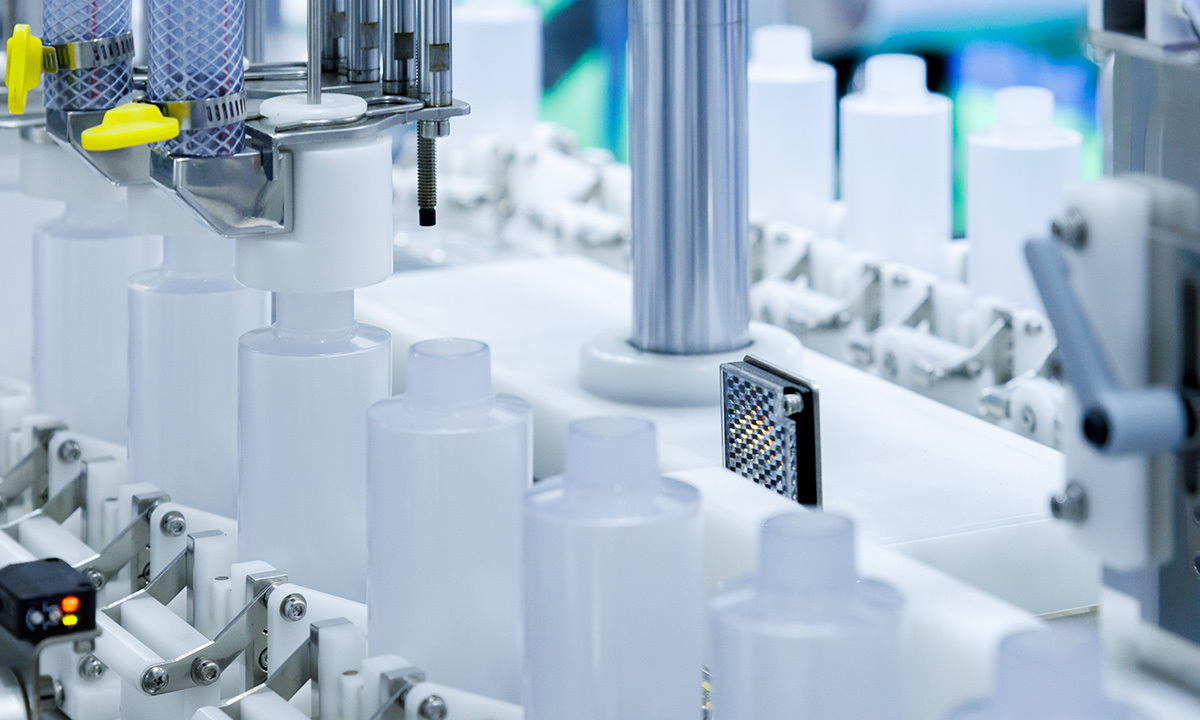
Flexcraft operates multiple portable Class 8 cleanrooms, allowing beside-the-press assembly and packaging in a fully controlled environment. For reagent bottles, lab vessels, and other sensitive labware, this eliminates contamination risks that standard molding environments simply aren’t built to prevent.
Producing in a controlled cleanroom immediately after molding means a part moves from press to package without exposure to the variables that could introduce contamination, a critical distinction for any product that will ultimately hold a reagent, sample, or diagnostic fluid.
Reagent bottles and diagnostic labware often need to interface precisely with lab equipment, automated fill lines, or other components, which means dimensional tolerances have to hold consistently across every single unit, not just most of them.
Flexcraft’s blow molding, injection molding, and injection stretch blow molding capabilities are engineered to produce tight-tolerance components at scale, so a reagent bottle manufactured today performs identically to one manufactured months from now, batch after batch.
Choosing the right resin for medical-grade plastic manufacturing means balancing chemical compatibility, sterilization requirements, clarity, and mechanical performance, often for a product that will hold a sensitive reagent or come into contact with a diagnostic sample.
Flexcraft conducts resin sampling and testing to find the material that fits both a product’s functional requirements and its regulatory demands, rather than defaulting to a standard resin that may not hold up to a specific sterilization method or chemical exposure.
In medical and life sciences manufacturing, a product isn’t considered ready simply because it looks right off the line. Flexcraft supports validation protocols including IQ, OQ, PQ, and PPAP, giving customers documented proof that a molding process performs consistently before it ever scales to full production, whether that documentation follows a customer’s own protocol or Flexcraft’s proven internal standard.
This structured validation approach catches process variability early, before thousands of units are produced, protecting customers from the far more costly scenario of discovering a defect only after a product has already reached the field, a lab, or a patient.
Flexcraft’s ISO 9001:2015 certification reflects a broader commitment to documented, auditable processes across every stage of production, from initial resin selection through final quality inspection.
Facilities maintain constant temperature and humidity year-round to protect process reliability, a detail that matters enormously in medical-grade manufacturing, where even small environmental variables can affect material behavior and finished product consistency.
Custom medical and labware manufacturing often involves complex geometries, multi-component assembly, or tight regulatory requirements that push past what many packaging manufacturers are equipped to handle. Flexcraft has built its medical and life sciences capabilities specifically to take on that complexity rather than avoid it, including projects other manufacturers have turned away.
For brands and labs developing reagent bottles, diagnostic labware, or other precision medical components, that means a manufacturing partner with the cleanroom environment, engineering expertise, and validation discipline to move a product from concept to full-scale production without compromising the standards the category demands, at any volume the project requires.
Tags:


